The future of veterinary practice: Technology, culture, and collaboration
by Jack Peploe, CEO of Veterinary IT Serviceswith insights from Eric Goldman, President of Vetology AIand Francesca Verney, Veterinary Director at Pet People
Transformational Technology
by Jack Peploe, Veterinary IT Expert and CEO of Veterinary IT Services
The veterinary profession is standing on the edge of transformation. Technology, client expectations, and workforce dynamics are evolving at a pace we’ve never seen before. The pandemic accelerated digital adoption across every corner of healthcare, and veterinary medicine is no exception. Meanwhile, headlines about artificial intelligence dominate the news cycle, while practices grapple daily with staff shortages, shifting client demands, and rising caseloads.
Change is not on the horizon - it’s here. The challenge for veterinary teams is no longer whether we engage with new ways of working, but how we shape them into something sustainable, ethical, and empowering. What forces are already reshaping the veterinary practice of tomorrow, and what will it take for us - as professionals, leaders, and teams - to thrive in this new era?
In the modern practice, technology is no longer optional. From practice management systems to cloud-based workflows, and automation to cybersecurity, digital tools are woven into the very fabric of veterinary care. But we’ve entered a new phase: technology is shifting from being a set of “tools” to becoming a trusted “team member.”
Think of scheduling platforms that optimise rotas to protect work–life balance, or stock-control systems that prevent financial leakage. Think of automated reminders and online portals that improve client communication while freeing up precious staff time. These are not gimmicks - they’re enablers, giving practices the space to focus on what matters most: clinical excellence and client experience.
Crucially, technology should never be viewed as a replacement for veterinary professionals. Its greatest potential lies in augmentation. A cloud system doesn’t replace a practice manager, but it helps them lead with clarity. A digital triage tool doesn’t replace a nurse’s judgment, but it helps them prioritise patients more effectively. The future belongs to practices that see technology as a partner, one that complements human skill rather than competes with it.
This is why our Modern Veterinary Practice Theatre at London Vet Show was created: to champion this ethos and to shine a light on pioneers proving that technology is at its best when it empowers clinicians, caregivers, and leaders.
Insights from Eric Goldman, President of Vetology AI
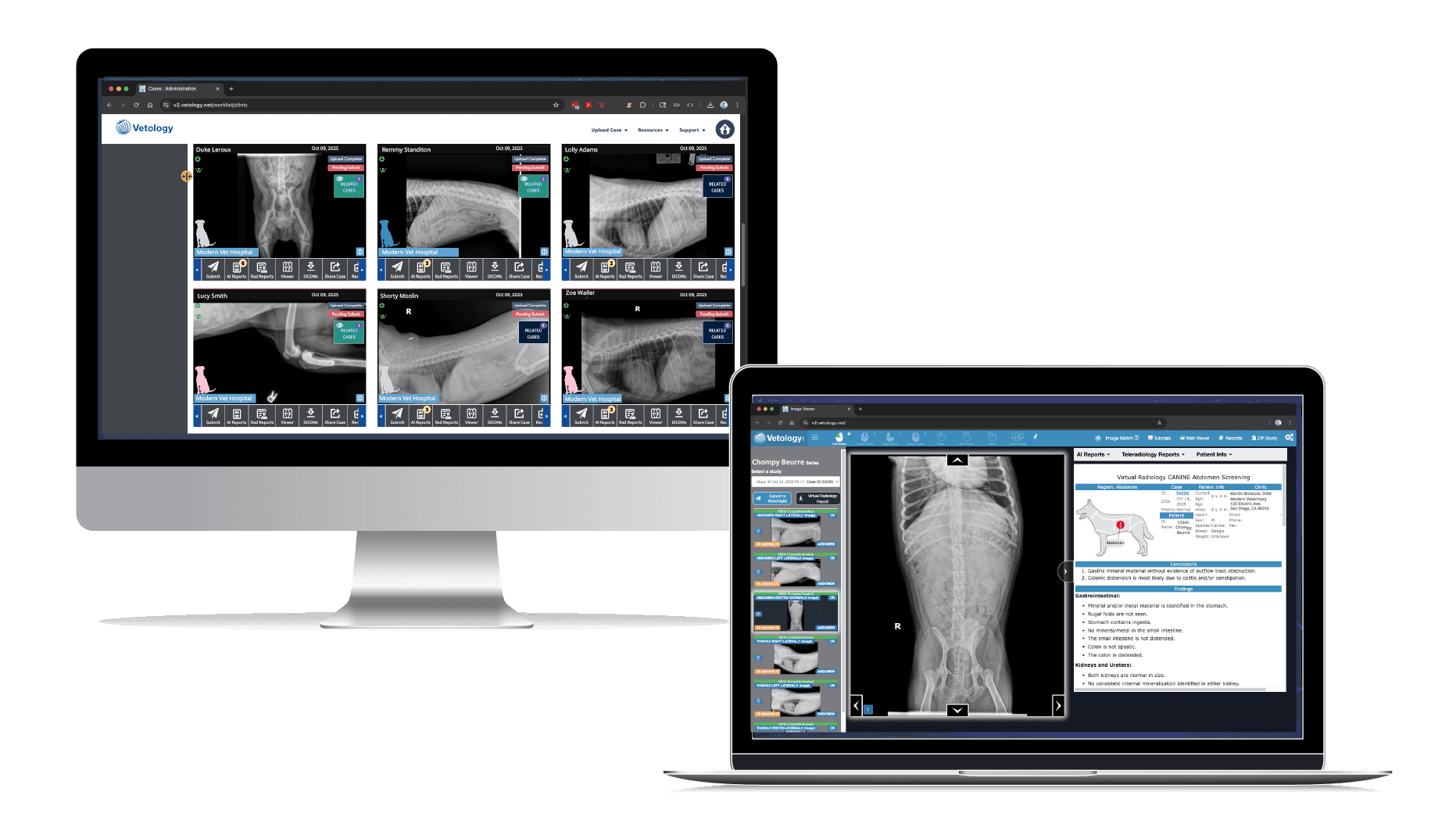
Artificial intelligence is currently one of the most visible and debated innovations in our profession. As a society, we are wrestling with big questions about the role AI should play, how closely it should be monitored, and where its boundaries ought to be. Used responsibly, AI has the potential to ease the burden on knowledge workers like yourselves - supporting, not supplanting, the judgment of trained professionals. In veterinary imaging, this is already becoming reality. Caseloads are rising alongside pet ownership, yet the number of boarded radiologists remains limited. AI screening
tools, like those developed at VetologyAI, are now assisting veterinarians by navigating diagnostic pathways more efficiently, ensuring timely and high-quality care. Importantly, these tools are not replacements for radiologists, but safetynets and accelerators that support the diagnostic process.
The parallels with the adoption of mobile phones are clear. Early adopters experiment, busy pragmatists follow, and eventually the mainstream embraces the new normal. AI is following this curve. Already, classifiers - the underlying models that identify specific conditions - are being built hand-in-hand with radiologists, embedding nuance and clinical expertise into every layer of development.
Looking ahead, the potential grows exponentially. Imagine an AI tool that integrates bloodwork, prior imaging, SOAP notes, treatment outcomes, and the latest research articles into one evidence-backed insight. Such a partner would lighten the cognitive load for practitioners, allowing us to spend less energy searching and more energy caring.
Yet caution remains vital. Radiology is subjective, and AI will only ever be as strong as the data it learns from. Broad claims of diagnostic accuracy must be balanced with transparency about limitations. The value of empathy, clinical judgment, and human connection cannot - and should not - be outsourced to a machine.
If you’re interested in learning how Vetology AI can enhance diagnostic workflows and elevate patient care for your UK-based practice, reach out to the VetIT team today to discuss the solution in more detail and schedule a demo.
Find out more
Insights from Francesca Verney, MA VetMB, MRCVS, Veterinary Director at Pet People
It’s been the case for a long time, but now more than ever, the veterinary industry is one of service rather than healthcare. And what makes service transcendent? A seamless customer experience from start to finish (and beyond). This relies on process excellence – our systems have to be slick and smooth, and critically, underpinned by a strong, positive team culture.
The client can spot the burnt-out vet in the consult room. The EMS student can feel the
tension in a divided prep room, the RVN feels a pull out of the profession every time their value is ignored. How the team members feel in their hearts and stomachs on a Sunday night is bound to the client experience and great practices recognise this.
It’s harder than it looks though. Culture is not found through yoga, pizza Fridays, bonuses or rapid promotion. Culture is how you respond to an anaesthetic death, noticing that CPD opportunity for someone, the message at the end of the day, public celebration of individual courage, transparency about the business and unreserved humility from the leaders.
Practices with vibrant and open cultures will translate this straight through to the clients, staff retention will be better, humans will be happier, clinical work will be of higher quality, fall-out will be financial security.
The veterinary profession has always relied on trust, but in today’s world, trust demands transparency. Clients expect clarity in pricing, treatment options, and communication. Teams expect openness from leaders on everything from workload distribution to business strategy. Technology providers, too, must embrace transparency if they want to earn a place in the practices of the future.
This is not just an internal conversation. The Competition and Markets Authority (CMA) has published its provisional findings from its investigation into the UK veterinary sector - with transparency at the very heart of its concerns. The review covers how prices are presented, how ownership structures are communicated, and how medicines are supplied. The message is clear: the appetite for transparency is strong, and those that respond effectively will be well positioned to maintain trust and confidence.
Without transparency, relationships fracture. With it, they deepen. Practices that adopt new technologies responsibly, explain their decisions openly, and treat both clients and colleagues with honesty will be the ones that build sustainable, long-term success. Transparency is not a buzzword - it is fast becoming the bedrock of professional credibility, and external scrutiny will only accelerate that shift.
No single vet, nurse, entrepreneur, or innovator can define the future alone. Progress will come from collaboration - across clinical disciplines, across practice models, across industries. Educators, researchers, technologists, data scientists and business leaders must come together to shape a profession that is not only prepared for change but energised by it.
This is the role of the Modern Veterinary Practice Theatre: a forum designed to bring those voices together, not to sell, but to spark the conversations that drive genuine progress.
The veterinary profession has always been resilient. Time and again, it has adapted to new challenges, from scientific breakthroughs to societal shifts. What makes this moment different is the sheer speed and scale of change.
The future of veterinary care is not about one piece of technology, one cultural shift, or one bold idea. It is about mindset - a willingness to remain open, to evolve, and to collaborate. Every vet, nurse, manager, and student has a role to play in shaping this future.
The question is not if change is coming, but how we choose to meet it. If we embrace it with courage, transparency, and unity, the veterinary practice of tomorrow will not only survive - it will thrive.
You can catch Jack, Eric and other industry leaders at LVS 2025:
Four minds, one future: Inside the veterinary profession of 203521st Nov, 12-13.30pmModern Veterinary Practice Theatre
Innovating with integrity: The ethics of AI in veterinary practice21st Nov, 10.45-11.35amBusiness Theatre
The UK’s most trusted veterinary IT experts. Delivering professional, specialised support for 20+ years.
Book a free consultation with Jack
Hear all things veterinary, in the Modern Veterinary Practice Podcast: